

Did you know you can make photographic prints using everyday materials you probably already have lying around your house? No fancy equipment or chemicals needs! In fact this project is so cool, no less than three people suggested it as a camp activity! And while it’s so simple you are sure to be hooked, what this does need it TIME, so better get started today!
Supplies: Turmeric Sun Prints
-
- Sturdy paper or natural fiber fabrics
- Paint brush or sponge *will stain*
- Coffee filter, empty tea bag, or cheesecloth
- Plant material, lace, photo negatives, anything fun you want to see printed!
- 1 teaspoon of turmeric powder
- 3 teaspoons of alcohol (70% or higher rubbing alcohol, vodka)
- 2 teaspoon of borax or baking soda
- 2 cups warm water plus access to additional water
- General Supplies: 2 small jars or cups, stirring tool (spoon/chopstick/etc), 2-3 trays/bowls/cookie sheets, and a picture frame (just the glass/plastic and cardboard backing – not the actual frame) slightly larger than the paper you use. *This will just be used during the project but will not be damaged.*
Instructions
DO TODAY!
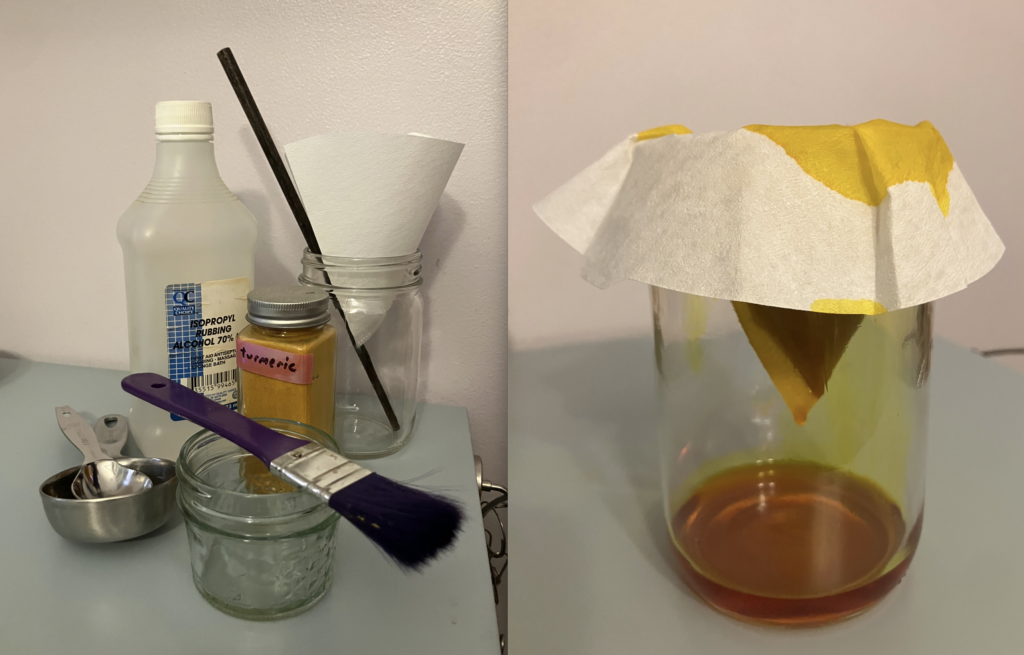
Make your solution! WARNING – your solution WILL stain! Please protect your surfaces! Mix the turmeric and alcohol in a glass container. You can either strain the solution as you mix – like making pour over coffee – or pour through a filter into a second container.
Prep your surface! For our examples we’ve chosen cotton fabric and water color paper, but as long as your paper is thick enough to handle getting wet it will work. Brush your solution over your surface with full thick coverage. Note that the more solution you add the longer your exposure time, but also the better the final image contrast. Place your painted surfaces in a low to no light space to dry overnight. You need these to be completely dry before exposing.
DO TOMORROW!
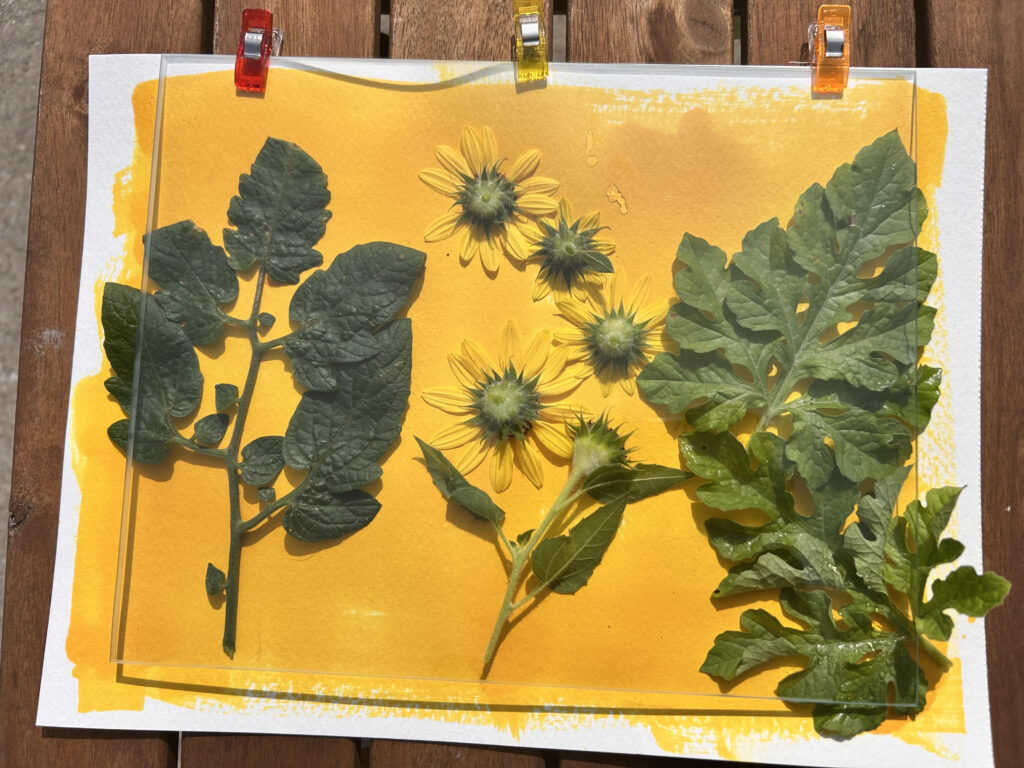
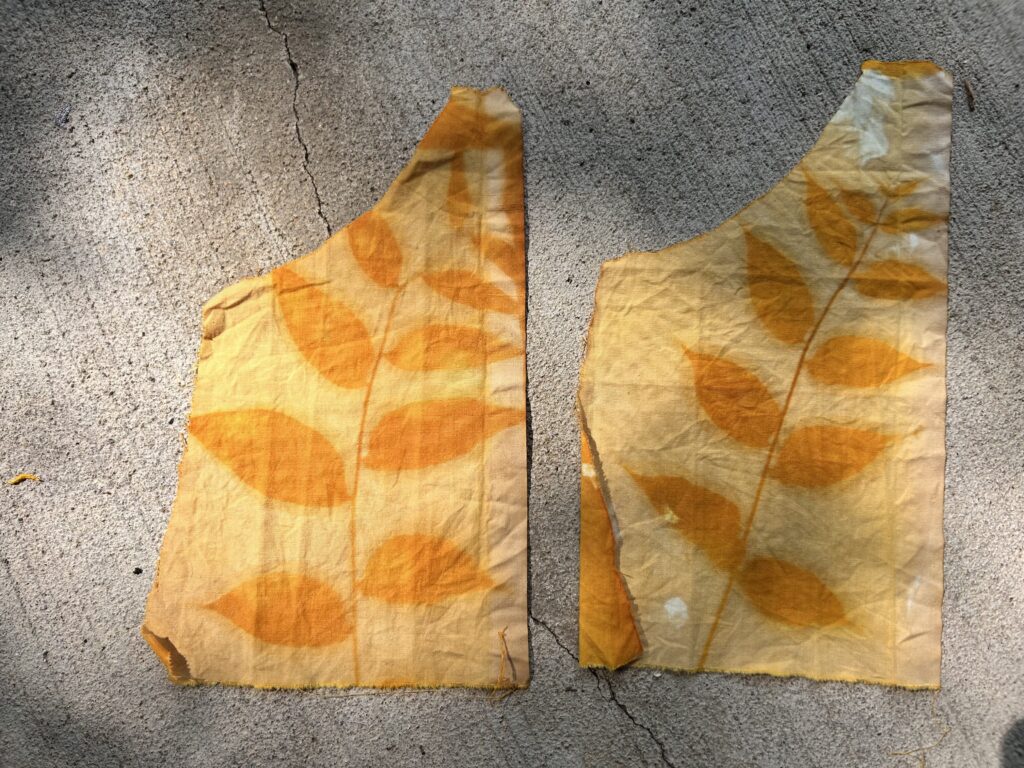
Expose your print! Anthotypes produce a positive image. Any part of your surface covered will remain dark, any part exposed will turn light. (This is opposite from a cyanotype print!) For this example we are using found plant materials from our gardens, but we’ve had success with packing tape photo transfers (attach the tape to the glass, not the paper) as well! (We have not had success with x-rays or photo negatives, but experiment away with whatever you’d like!)
Place the items on your surface as you’d like, then cover with a piece of clear plastic or glass to prevent them from moving. Put the print to expose in a very sunny location.
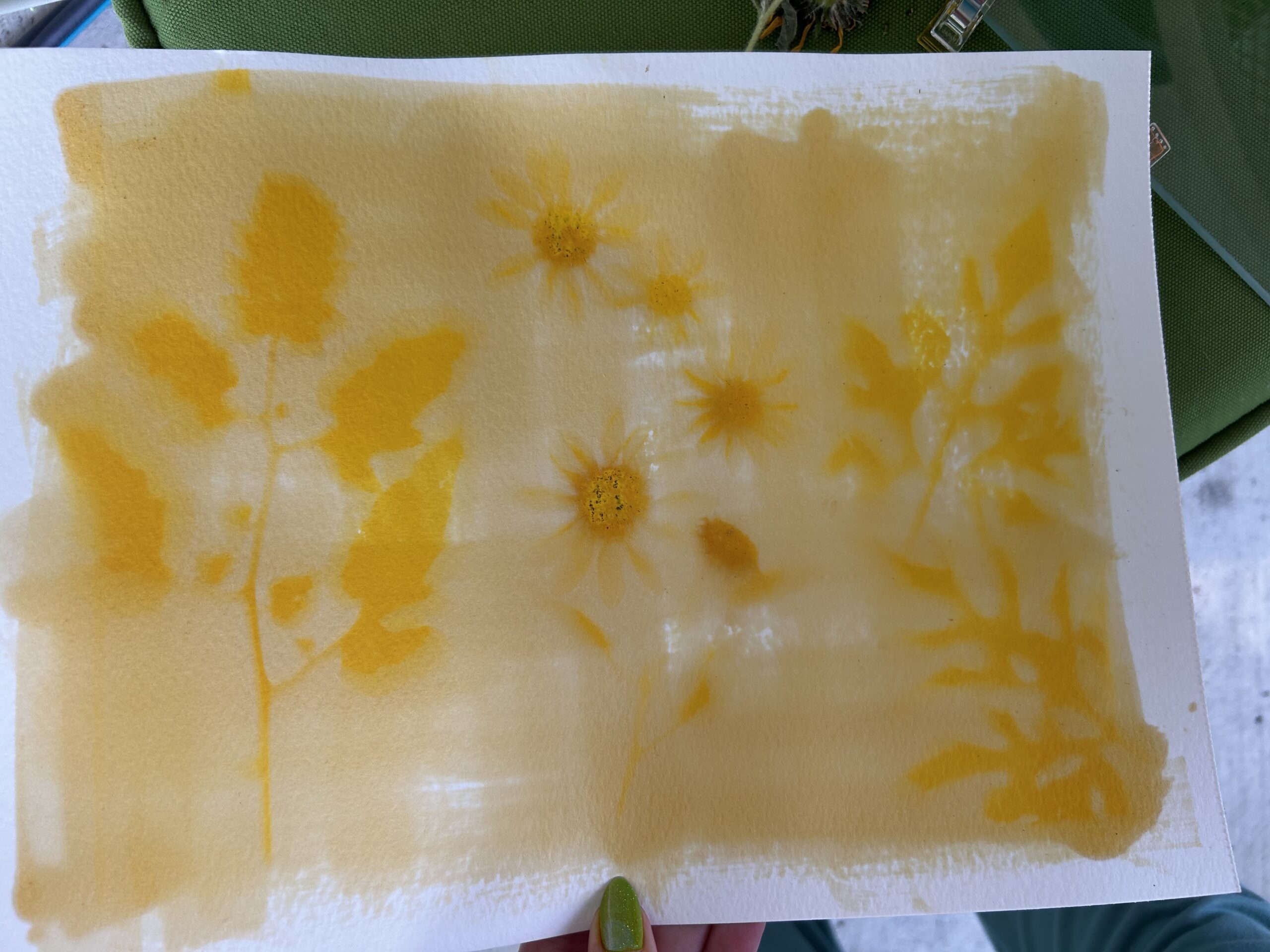
You’ll want to have the print expose untouched for at least 1-3 hours, but depending on various factors, you may need more time. You’ll know the anthotype is ready when the exposed yellow has faded away.
Once the anthotype is done, remove from sun and remove the plants or ephemera.
Fix and preserve! While your print is exposing, mix 2c water and borax/baking soda together until the powder is dissolved. It’ll likely be cloudy. Pour into a plate or shallow dish and submerge your print. If you don’t have the space, you can just paint multiple coats of the solution onto your print.
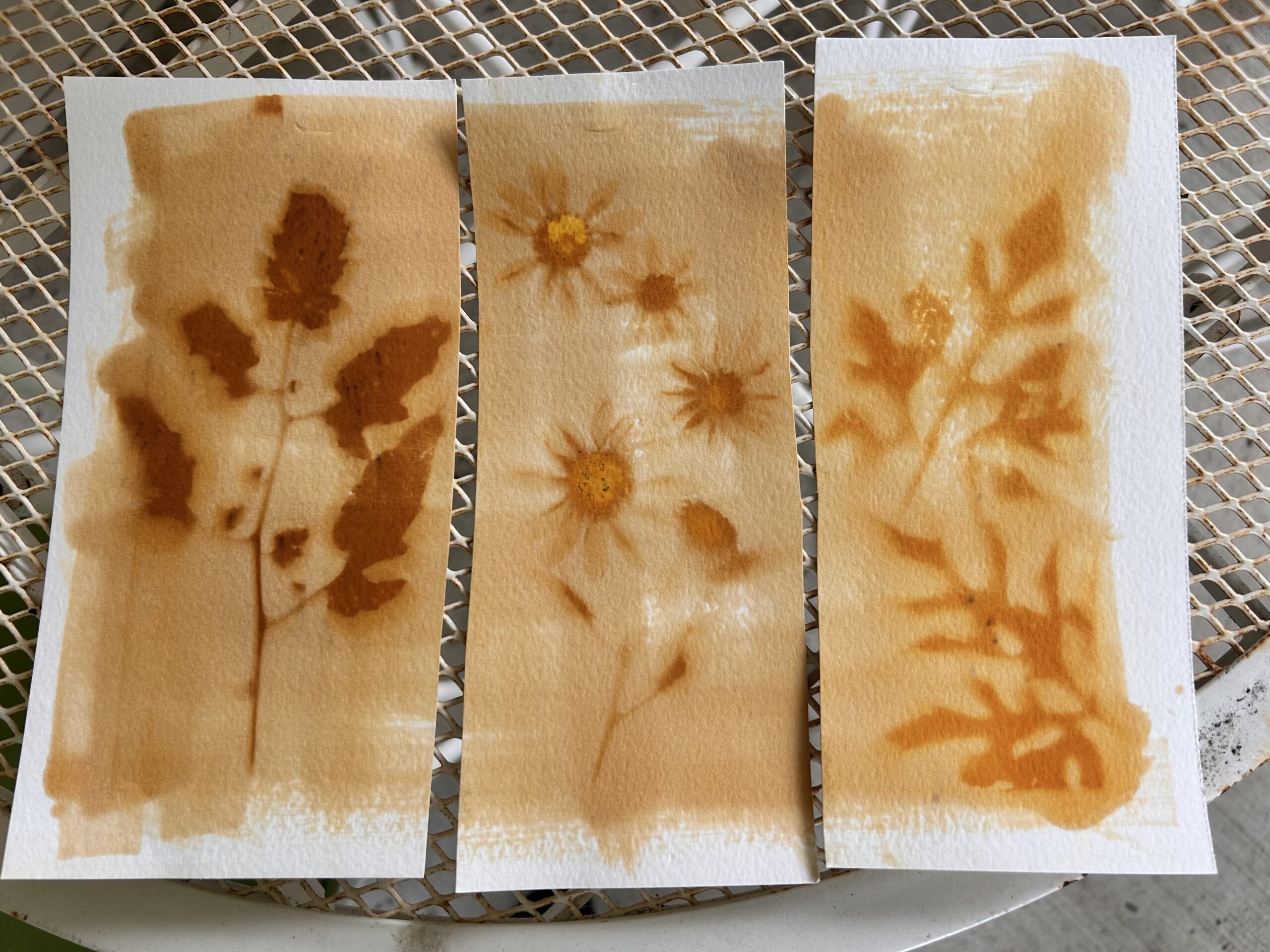
The time you keep the solution on depends on how dark you want it, so keep an eye on it. Keep in mind it’ll lighten up once dried! Once it’s about the color you want it to be, remove from the borax/baking soda mix and swish it around really good in a container of plain water or under the faucet. Lay flat or hang to dry.
Lyssy notes: These prints were all done on watercolor paper with ink from 2tsp of tumeric/3tsp of alcohol, and dunked in 3tsp of borax/water. The times in the mix ranged from 30 seconds to about 4 minutes. I’ve also done this on cotton, but the end result wasn’t very different from using baking soda. A stronger solution than I used (2tsp for each in this case) may change that, though.
The SCIENCE behind it!
Plant pigment chemistry! There are actually many plants containing colorful compounds that are light reactive. Under the intense UV light from the sun, these pigments break don during a process called photodegradation. It is basically a form of selective bleaching. Most plant dyes (including these prints) are not archival and will slowly break down over time even in low light. But give anthotype printing a try! You can experiment with all sorts of plants including beetroot, berries, and others!
Hosted by Lyssy & Summer
Lyssy is an aspiring Southern Illinois cryptid. When not wrangling her teenage monsters, she’s doing needlecrafts or playing cozy games on her Switch. Her current favorite fun fact is that mauve was the result of a science experiment on coal tar.
Summer AKA Camp Director Sumsy is a former ACTUAL summer camp counselor turned VIRTUAL summer camp director. She excels at spreadsheets, blanket forts, and always sings the silliest camp songs the loudest.