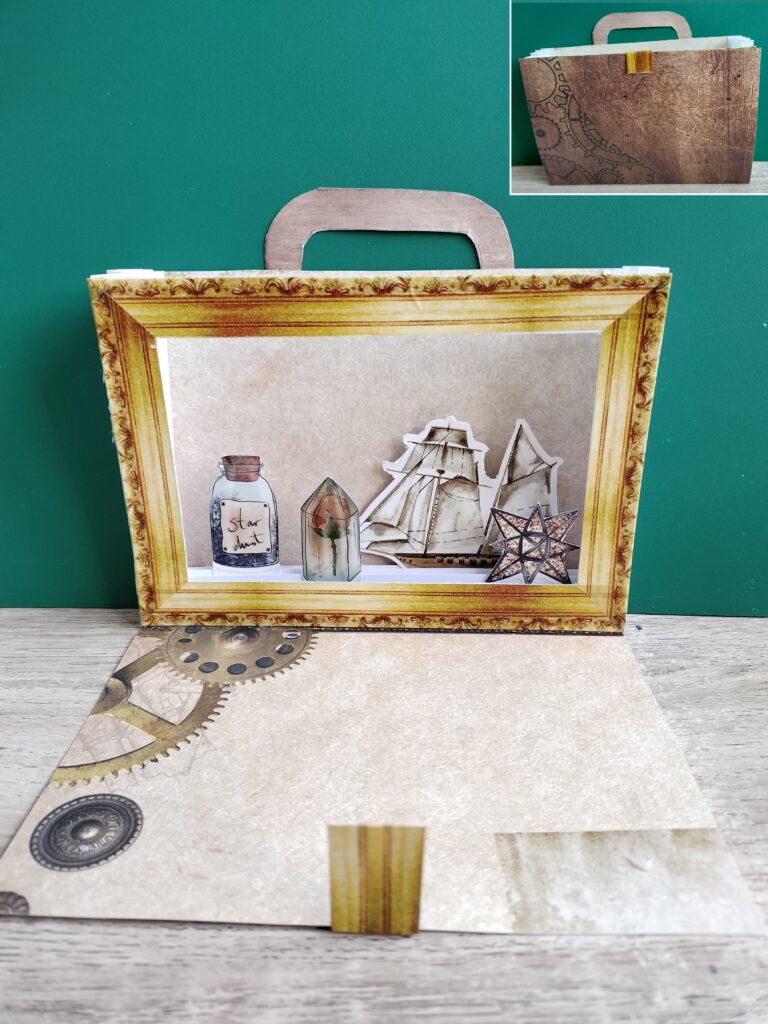
This postcard-sized cabinet of curiosities will proudly showcase your art, the oddities you have no doubt amassed, or those gorgeous stickers… Display it in your home or send it flat to your fellow scientists to make them jealous!
Note on the measurements: mine are in centimeters, converting to inches makes for some oddly-precise numbers. Any reasonable size will work, just make sure everything is to scale.
Supplies: Pop-up Cabinet of Curiosities
- thick paper, plain or patterned (an A4-sized sheet should be enough for the base model)
- thinner paper, 2 rectangles about 10.5 by 8 cm/4.5 by 3.5 in each
- pencil
- ruler
- scissors
- scalpel/boxcutter
- glue
- stickers of things you’d find in a cabinet of curiosities, or things cut out of books or magazines, or something to draw them on
- Optional: paint or markers, and whatever else you might use to decorate a card
Instructions
Step 1 – Cut two rectangles of the same size out of sturdy paper. For mine, I’m using an A4 sheet of paper cut into four pieces, making the final object roughly postcard-sized. I’m using white paper for now, but feel free to use patterned or textured paper, or to paint it beforehand.
Step 2 – Cut out a rectangle in one of them to create a frame. I leave 1,5 cm/0,6 inch on each side. Don’t discard the part you cut out, it could still be useful!
Step 3 – Optional: if you want to be able to close your cabinet of curiosities, you can cut out a door or shutters from sturdy paper too. I want mine to look a bit like a suitcase, so I’ll cut a piece of paper as wide as my frame, but slightly taller, and fold the bottom of it to glue to the bottom of the frame later. I’ll also cut a “lock” for it, as well as a handle that I’ll glue on top of the back panel later.
Step 4 – Next, make the sides. You will need two rectangles as high as your card (in my case, 10,5 cm/about 4,15 inches tall) and 8 cm/3,15 inches long. Since you’ll have to fold them, I’d recommend using thinner paper. Lay your rectangles on the shorter side (the one that’s not the height of your card) and mark a vertical line every 1cm/0,4 inch. Fold both rectangles along these lines, accordion-style.
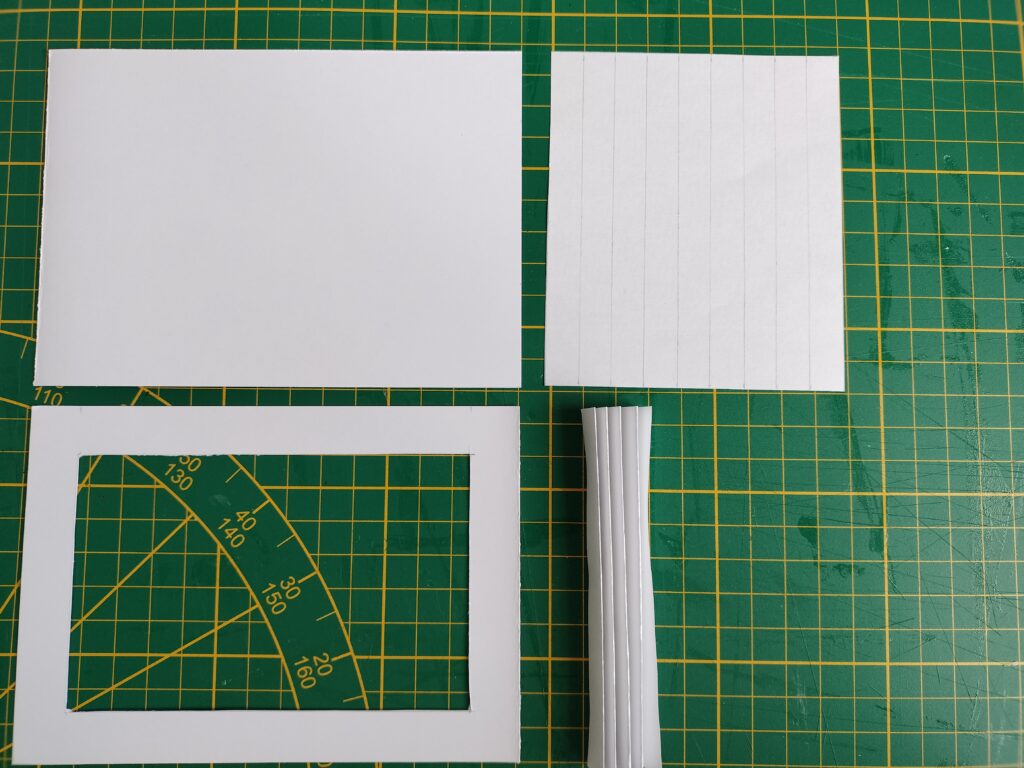
Step 5 – Now cut out three strips of paper the same width as your card, and slightly thinner than your frame. They will support the contents of your cabinet of curiosities, while also providing structural integrity to the card. You can cut additional strips of paper if you also want it to look like things are hanging from the top of your card.
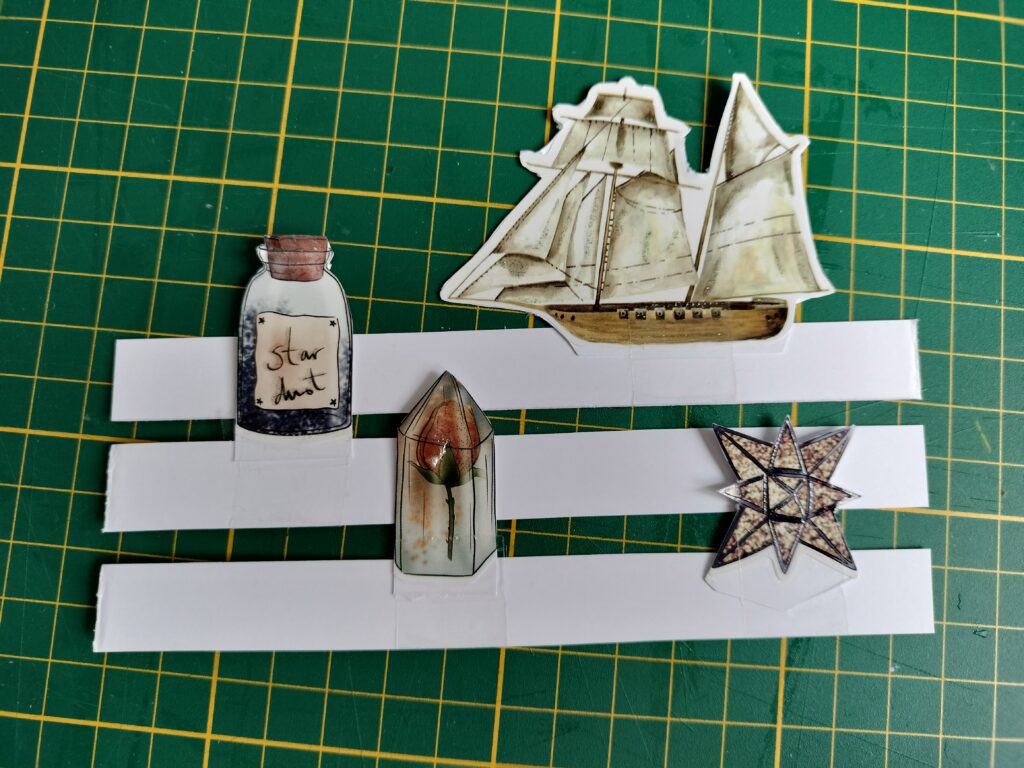
Step 6 – Now for the contents! Rocks, bottles, fossils, bones, shells… You can draw them, cut them out of books and magazines, print them, or use stickers. I’m not good at drawing, so I’ll glue some stickers onto some thick paper and cut out as much of the trim as possible. These will be glued onto the three strips of paper you cut previously, so you might want to leave a small length of paper under your pictures.
Once you’ve made your choice and cut everything, glue or tape your objects onto your strips of paper. I suggest keeping the largest objects in the back. Don’t put things too close to the edges, they won’t show from the front.
Step 7 – Now it’s time to assemble everything. First, take one of your accordions and glue one of its edges flat onto one side of your back panel. Then, starting from the back, glue the edge of each of your strips of paper at the bottom of one of the mountain folds. Carefully add the second accordion onto the other side of the card, then glue each strip on the corresponding fold.
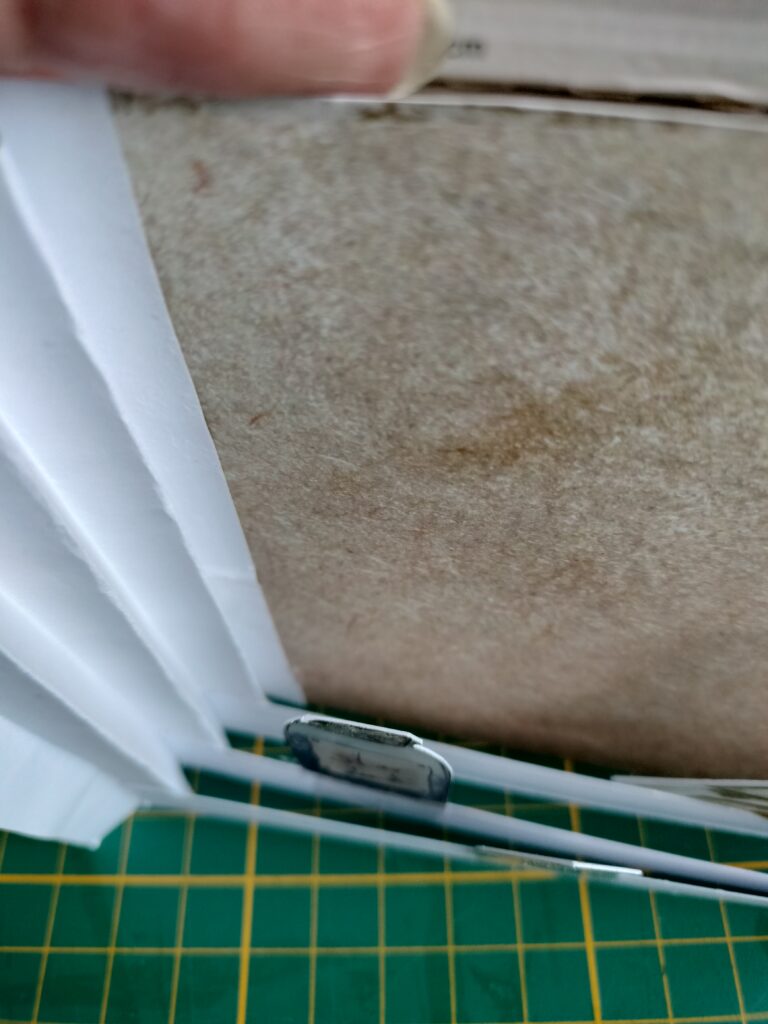
Step 8 – If you’ve made doors or shutters, glue them to the frame. Finally, glue the left and right side of the frame to the front of your accordions. Handles can be glued to the back panel.
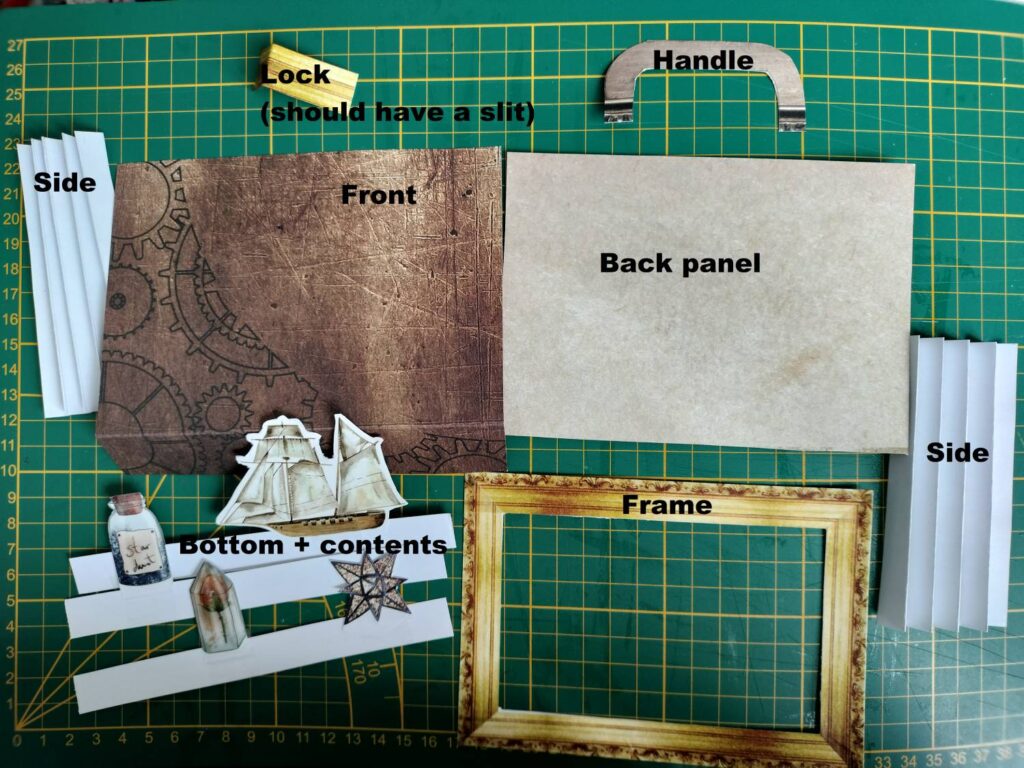
Voila! You can now display your own cabinet of curiosities, or flatten it and send it to a fellow person of science!
Hosted by Dale
Though they are more versed in the humanities, Counselor West do believe in the power of SCIENCE!!! and ominous liquids with funky colors. A librarian by trade, they spend more time and digital storage space than they should taking pictures of flowers and bugs, bothering innocent birds and investigating local spiders.